
What Are Music Scales? (And Why Every Musician Needs Them)
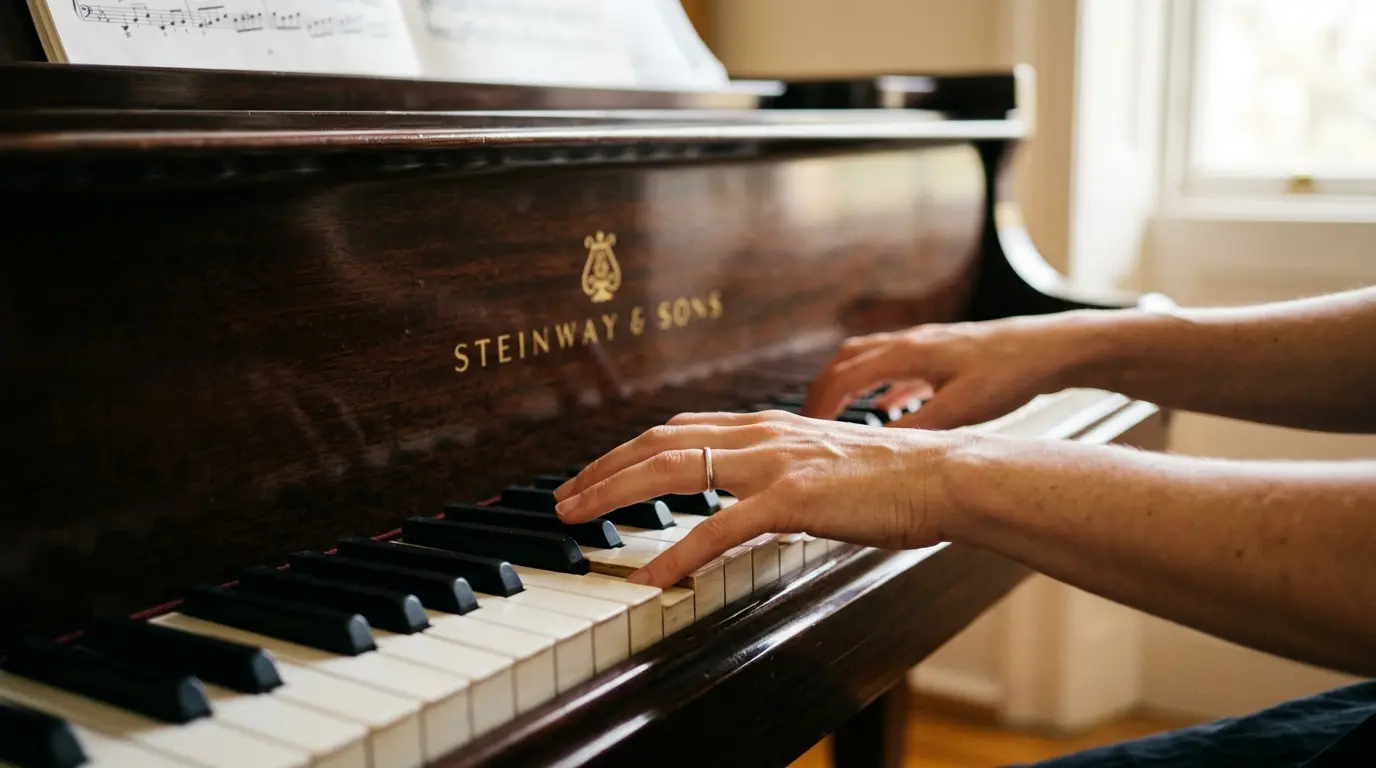
If you have taken even a single music lesson, you have probably been told to practice your scales. Most beginners hate them. Playing a scale feels like a boring, robotic chore that has nothing to do with the actual songs you want to play.
But asking "what are music scales and why do I have to play them?" is a bit like asking a chef why they need to know how to chop an onion. Scales are the absolute foundation of everything you hear on the radio. Every melody you hum, every guitar solo that gives you chills, and every bassline that makes you tap your foot is just a scale hiding in plain sight.
When you learn music scales, you stop guessing where your fingers should go. Instead of seeing a piano keyboard as 88 random black and white keys, you start seeing the invisible highways connecting the notes.
Here is exactly how scales work, and why learning them will save you hundreds of hours of frustration.
What Are Music Scales, Exactly?
At its core, a music scale is just a specific sequence of notes organized by pitch, usually moving upward or downward.
Think of the alphabet. If you randomly scramble the letters A through Z, you get a mess of sounds. But if you organize a few specific letters together, you get words. A scale is the musical equivalent of a word. It is a carefully selected group of notes—usually seven of them—that sound good when played together.
If you are writing a song and you decide to use the C Major scale, you are essentially telling your band: "For the next three minutes, we are only going to use these seven specific notes."
By restricting yourself to a single scale, you guarantee that your melody will not clash with the chords.
How Do Music Scales Work?
Every scale is built using a specific "formula" of spaces between the notes. In music, we measure the physical distance between two notes using steps.
- Half Step: The absolute smallest distance between two notes. On a piano, it means moving to the very next key touching your current key (like moving from a white key to a black key). On a guitar, it means moving up exactly one fret.
- Whole Step: The equivalent of two half steps. On a piano, it means skipping one key. On a guitar, it means skipping one fret.
Every single major scale in the world—whether it is C Major, F# Major, or Bb Major—is built using the exact same formula of whole steps (W) and half steps (H):
W - W - H - W - W - W - H
If you pick a starting note (called the "root" note) and simply follow that formula, you have built a major scale.
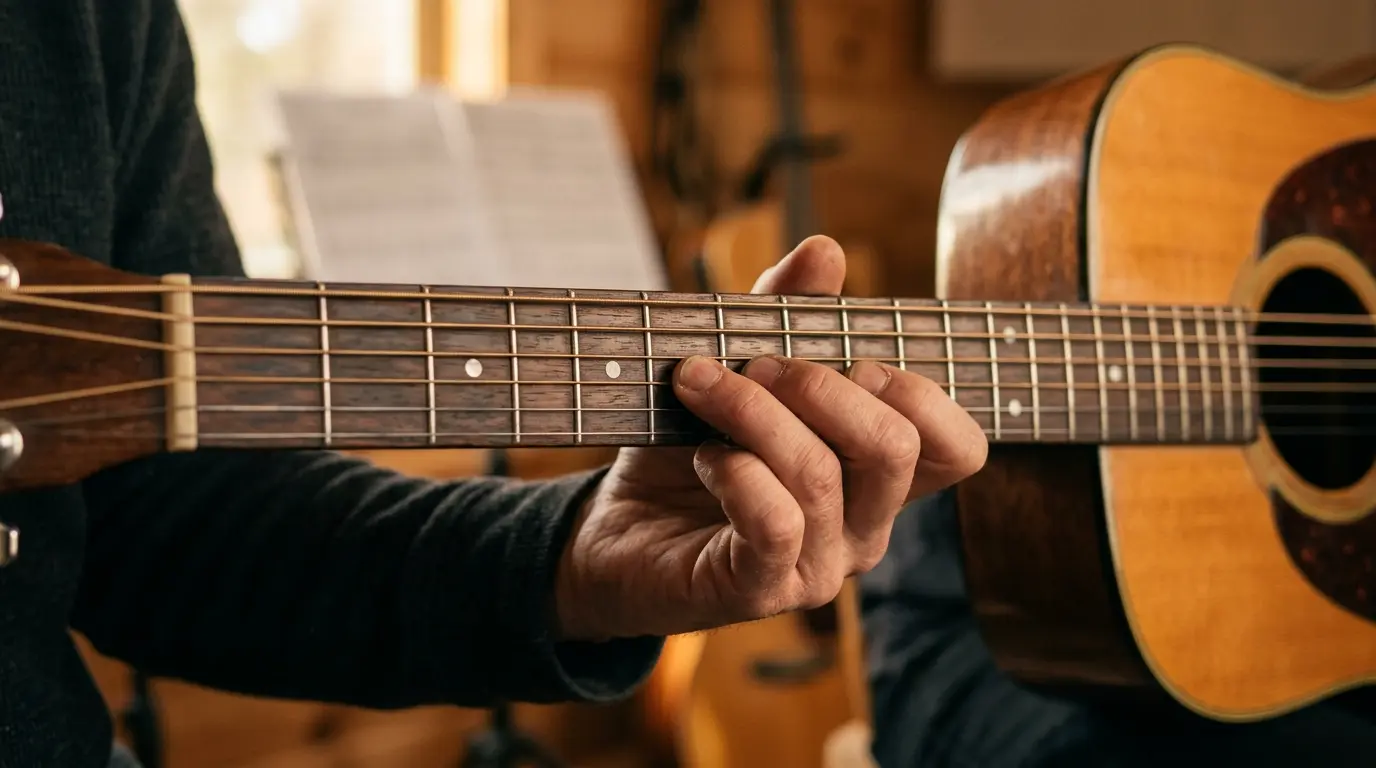
Try This Now
Build the C Major Scale: Find a C on your instrument (or a piano app on your phone). That is your root. Now, apply the formula.
- Move up a Whole Step (land on D).
- Move up a Whole Step (land on E).
- Move up a Half Step (land on F).
- Move up a Whole Step (land on G).
- Move up a Whole Step (land on A).
- Move up a Whole Step (land on B).
- Move up a Half Step to finish back on C.
You just played C - D - E - F - G - A - B - C. If you memorize that formula, you instantly know how to play every major scale on your instrument.
Why Learn Scales? The Practical Benefits
Most beginners understand the theory of scales, but they still don't want to practice them. If you are struggling to find the motivation to run through your scales with a Metronome, here is what they actually do for your playing.
1. You Will Learn Songs 10x Faster
When you don't know your scales, learning a new song requires you to memorize the placement of every single individual note. It is exhausting.
When you know your scales, your brain groups the notes together. If you are learning a solo in the key of G Major, your fingers already know the exact shape of G Major. You aren't memorizing forty random notes anymore; you are just memorizing a specific pattern inside a scale you already know by heart.
2. You Stop Hitting "Wrong" Notes
Have you ever tried to improvise or make up a melody, only to hit a note that sounds incredibly jarring and terrible? You stepped outside the scale.
When you practice scales for beginners (like the Major scale or the Minor Pentatonic scale), you are building muscle memory. Your fingers learn to stay within the "safe zones." When you are jamming with friends, knowing the scale means you can close your eyes and play almost any note in that scale, and it will sound musically correct.
3. Your Technique Will Improve Instantly
Playing a scale cleanly requires coordination between your left and right hands. It forces you to cross strings on a guitar cleanly, or to pass your thumb under your fingers gracefully on a piano.
If you spend five minutes a day playing scales slowly to a click track, your overall speed, timing, and finger dexterity will skyrocket.
Common Confusion: Major vs. Minor Scales
The biggest point of confusion for students learning music theory scales is understanding the difference between major and minor.
The easiest way to think about it is emotion. Major scales generally sound happy, bright, or triumphant. Minor scales generally sound sad, dark, or tense.
They sound different because they use a different formula of whole steps and half steps. The minor scale simply flattens the 3rd, 6th, and 7th notes of the major scale. That tiny physical shift of your finger down by one fret or one key completely changes the emotional impact of the music.
Pro tip: Don't try to memorize the minor scale formula right away. Just learn your major scales first. Once you have the major scale locked into your muscle memory, learning minor scales is incredibly easy because you are just altering three notes you already know.
FAQ: Common Questions About Scales
Do singers need to learn scales?
Absolutely. While a guitar player uses scales to train their fingers, a vocalist uses scales to train their ear and their vocal cords. Singing scales up and down a piano is the single fastest way to improve your pitch accuracy and expand your vocal range safely. If you struggle with pitch, practice singing scales into an Acoustic Analyser to visually see if you are hitting the exact notes.
Which scale should I learn first?
If you play the piano, start with the C Major scale. It uses only the white keys, making it incredibly easy to visualize. If you play the guitar, start with the A Minor Pentatonic scale. It is a simplified five-note scale that forms the basis of almost all rock, pop, and blues solos.
How long should I practice scales every day?
Five to ten minutes is plenty for a beginner. The goal isn't to play them for hours; the goal is consistency. It is much better to play your scales for five minutes every single day than to play them for an hour once a week.
Next Steps: Practice with Purpose
Don't just read about the formula. Pick up your instrument right now. Find your starting root note, turn on a metronome to a slow, comfortable pace (around 60 BPM), and play a major scale up and back down. Pay attention to the physical distance between your fingers on the whole steps and half steps.
Related Topics to Explore: